Autechre
| Ratings (about) |
|---|
| Biography |
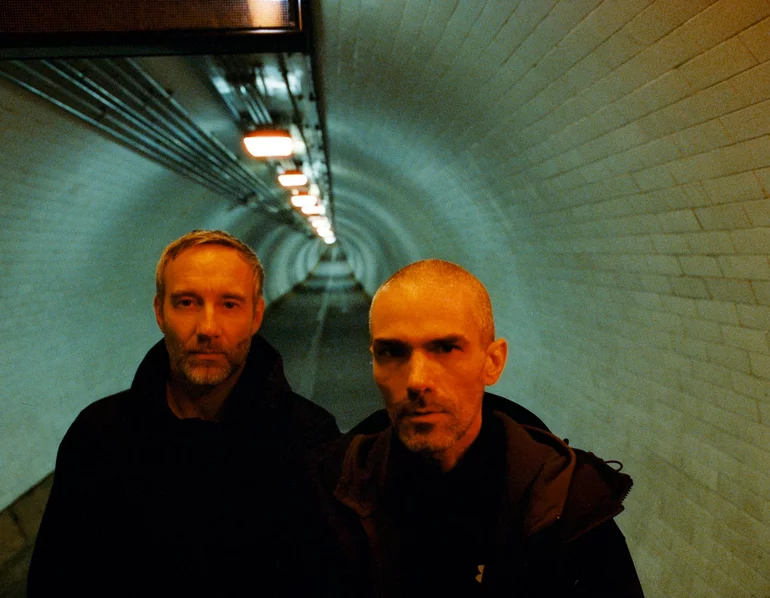
Rob Brown and Sean Booth of Autechre met through mutual interest in breakdancing and tagging in Manchester, 1987. With a dedication to dance music, hip-hop and house (though often obfuscated), they've demonstrated the most comprehensive use of the unlimited potentials for sound in electronic music out of anyone. In their work all manner of musical events are engineered with precision and are interlocked: perceptions of pitch, rhythm, dynamics and timbre all bleed into each other into new phenomenon, and they piece them together into often intricate compositions, the small cogs working themselves together into larger movement like the minutiae of a mechanical watch. There is not one single aesthetic which could describe their prolific output, each release reveals a unique logic and communication, but there is a rough divide in their discography before and after MaxMSP becomes their dominant tool, which is around the release of Confield and Gantz Graf. On one side, they explore an austere dimension of dance music in geometrically progressing compositions with minimalistic repetition, and on the other side the compositions are seemingly constructed through irrational numbers instead of ratios, with musical parameters free-floating and interacting through differential equations in software. A third era can also be distinguished post SIGN/PLUS with their loss of interest in the studio album format and full-time dedication to live sets. Autechre / Saw You is the earliest documented recording from 1990, an 11 minute demo with a download released by Sean on Jan 13th 2024. They're tracks that could have been spell-binding at raves. Lego Feet and Cavity Job are their first releases, the former is a prototype for the sound of future (controversially named) Intelligent Dance Music, it's a sequence of unnamed tracks which range from standard 4/4 breaks to interpretive rhythms that would demand bravery from any dancers, as well as some ambient melodicism and soundscapes. It may be a historical novelty but it displays a large vocabulary and an inventive spirit that will be carried into their future. Cavity Job is a pure workout in breakdance with no restraint in its spastic intervals and playful sounds of maximum contrast.
Incunabula is their first full offering, oriented towards ambience rather than dance. It can be poorly misattributed as devoid of emotional content, but it is a perfect soundtrack for the schizoid, with depth and warmth in its inner world hidden amongst aloof and languid forms. There is still emotion even in being disconnected. 
The schizoid nature of Autechre's music is brought to harrowing intensity on Amber. The vocabulary of organic sounds and audio effects is much larger in addition to a greater depth in their non-discrete sounds such as droning and warbling basslines. This is immediately demonstrated on Foil, compared to something like Bike on Incunabula there are fewer patterns in rhythm and pitch, but through the use of audio effects and alteration of voice as compositional elements it is just as dynamic, and simultaneously becomes monothematic. Elements and pitches evolve according to continuous curves: this imparts a different psychology to the comparatively step-wise and discrete compositions of before. Foil is electronic music at its most alien and evocative yet. These expressions of alienating distance become piercing on Piezo, early Autechre's first masterpiece. The pitch-bending and manipulation of drums is not far removed from Indian classical music, short synthesizers chirp in identical cadence and manner to animal cries. It comes together into imagery that is very human, tribalistic and lush but it is contrasted against tall imposing sirens and melancholic pads of clear digital nature: this creates two opposites, and like two opposite complementary colours, they contrast in a way that makes each others qualities resonate. Here it's an interaction that communicates painful confusion and corroded identity. Anti EP (released between Incunabula and Amber) is a return to the intense rave sound of Lego Feet but with a now more sophisticated production. Flutter is of note in its blending of rave culture and dance with the ethereal and intense feelings that can fuel it. In addition to this is the drum programming, deliberate in protest against the attack on raves by Parliament, which myopically described them as "characterized by repetitive beats". Autechre put on the sleeve a sticker reading Tri repetae shows further development in shaping unique voices and sounds for their tracks. The compositions are very neutral and level, preferring asynchronous developments opposed to deviation from a central idea, but they are certainly not static and unfold like fugues. The moderate flatness in theme along with voices dressed in cold metallic sounds and supersonic subsonic chirps and clicks makes for a potentially unpleasing end result, but it is the unique aesthetic insight of Sean and Rob that can reveal profound beauty in these mechanical and landfill-coloured unwantables; this music holds communicative power and a metaphysics that goes beyond its display of technical proficiency. The Garbage EP is predecessor to Tri repetae. Garbagemx36 takes on symphonic proportions in its dense layering of intrigue and emotional counterpoints, but it nonetheless is very personal and stays true to Autechre's idea of beauty in the mundane. Rhythms and their accents are logically arranged like tilework and document the day-to-day of a factory, small asynchronous melodies document the thoughts of workers lost in their implacable environment. PIOBmx19 and Bronchusevenmx24 continue this aesthetic thread but through arrangement of lost and found samples, the artificial soundscapes turn lush. VLetrmx21 is an unlikely track in the entirety of Autechre's discography in it's immediate tragedy but it works as a complement to the epic of Garbagemx36. There are none of the discrete sounds that usually populate their tracks, there is instead a monumental backdrop of muted strings - it swells, becomes choking, and dissappears as though not happening in the first place - a portrait for the ephemeral sadnesses that come into our lives. Garbage could be considered the most emotional work by Autechre, and as though they spoke in this manner only because it felt opportune to: this emotional overflow is singular and without excess. Anvil Vapre EP displays some of the same symphonic elements of Garbage EP on Second Bad Vilbel but in a less believable and borderline apocalyptic setting, the industrial setting of before lose their profound personal qualities. Second Scepe is an unusual track for Autechre in its elegance. Industrial and hip-hop melodies are woven in unique manner on Second Peng.
The partner EP to Chiastic Slide is Envane. The cacophony is present but has none of the imposing brutalism, Goz Quarter feigns itself as a playful b-boy track before losing itself in unsettling quietude. A similar formula appears on Laughing Quarter and Draun Quarter. Cichlisuite EP (pronounced sickly-sweet) doesn't break new territory, but Yeesland shows the immense technical abilities the duo have reached, with rhythm being encoded in the very textures of sound. Characi too displays their deftness, this time is weaving and navigating countless pitches together into a single musical unit. Krib is a snapshot into the future with their organic sounds reaching tactile levels of reality, most noticable in the marble rolling like sounds. All manner of electronic experimentations and ideas are rolled together into one LP5, it unfortunately lacks any cohesion. Vose In, Corc and Caliper Remote don't offer anything they haven't done better before, but setting the confusing track layout aside the songs Arch Carrier and Drane2 are novel inventions, but Rae stands apart as a masterpiece. In it a complex intro of linear drumming settles into a sound of pure defeat and aimless melody, where even the timbre of instruments sounds sniffle-like and teary; there is no shortage of melancholic tracks from the duo but they've yet to make something with this tenderness, a difficult thing to phrase together in their austere musical vocabulary. 
The organic nature of Autechre's digital sound changes character on the (album-length) EP7, the hyper-active folk melody of Rpeg is wrapped in timbres of a warm lustre, the feelings of enclosure are pleasant like that a hot bathroom/sauna. Squeller is a familiar metallic sound by this point, but the rhythms are more human and the tone's less serious than Chiastic Slide. Left Blank starts as pointillistic decoration of empty space with sound, and warps into unimitable play of pitches where melodies are felt but could not be sung. Outpt is overwhelming in warmth and texture, where interaction of temperatures is vivid like a Turner painting; Maphive 6.1 is unmistakably lovely, where a fantastical procession introduces a shy melody, with delicate pitch-bending that mimicks human voice. The rotating ambience of chimes playing in random yet intrinsic patterns is fitting for a zen garden. A perfect ending, Pir is cathartic release. The duo's ideas are light-hearted and without the isolating angst of works prior. The two recordings Peel Session and Peel Session 2 are original compositions for John Peel's Radio 1 show (dating 1995 and 1999 respectively). Drane is heavily minimalistic and is similar in tone to Garbage EP recorded the same year. Peel Session 2 is the most interesting of the two, all the tracks may have sinister tones or cacophony but the end result is very playful. 19 Headaches is the clear highlight, through repetition and broken tempi an oneiric atmosphere is created where musical events seem indeterministic, deja vu and errors made by a dreaming brain are the common phenomenon here. The contributions of Confield are moderate and it can be viewed as the transitional work to a workflow that heavily utilises MaxMSP and generation, these things may have been used earlier on EP7 but the methods behind the duo's music is not always publicly known. The exercises in audio synthesis are impressive and create great effect in the petri dish patterns of Eidetic Casein, incomprehensible rhythms of Lentic Catachresis, medieval atmosphere of Parhelic Triangle and the explosions of Pen Expers, which shatter heavenly melodies only for them to self-ressurect. Tracks like Bine feel aimless but viewed as a catalog of auditory phenomenon it can still inspire awe. Gantz Graf picks up where Confield left off and trims off the excess, the incomprehensible artifacts of Bine and Lentic Catachresis are sculpted into monolithic form on the title track Gantz Graf, the feverish Dial sounds almost like a disturbing Shephard tone with its continously shifting tonality. Cap.IV might be the highlight here more-so than the title track, it demonstrates a gentle melody retaining its form in a storm of unrelenting and accelerating clicks; it's both a potent metaphor for inner peace and compsure as well as a unique musical exploit of the minds ability to descend into harsh stimuli impercetibly, i.e "frog in boiling water" effect. 
All of Autechre's previous work was the necessary training for the creation of Draft 7.30 where all disciplines of audio synthesis and composition come together to form unexplainable phenomenon. 
After recording one masterpiece they recorded another: Untilted. Exploits of discrete and hardcore sound are the dominant method of this work, this is demonstrated on the opener LCC which has the subtlety a bullet in its violence but in it is still profound discipline and logic; great architecture meets homocidal ideation as seen in intricate mechanisms of an automatic rifle. In its second movement the track transfigurates into mounrful rumination, as though confronted with its own violent design and its dismal participation in war of indispensible nature. The temperate foghorns and wistful climate of Altibzz introduces us to Quaristice; immediately discernible from the track listing is the focus on small
musical fragments rather than the evolving soundscapes of before, any track longer than 4 minutes is an outlier. This is a downgrade in format but plenty of these fragments do carry intrigue, most notably Altibzz, paralel Suns, Steels, Tankakern, Notwo and Theswere. Thankfully these ideas would receive the proper attention and track length they deserve on the next release Quaristice.Quadrange.ep.ae, the first offering of fully ambient music by the duo with potent textural exploration. Oversteps and its partner EP Move of Ten are the most melodic of Autechre's later work. see on see is uniquely pretty, Treale exudes powerful and unlikely chromas, os veix3 has a rare delicate nature. The melodies of known(1) and O=0 must be given special mention, there is tenderness and love even if hard to decipher and alien in structure; if Tri repetae and Garbage EP are expressions of beauty in the mundane, Oversteps is beauty in the disfigured. Exai L-event SIGN PLUS The duo performed live sets since the beginning with soundboards and bootleg recordings dating all the way back to 1991, though they would not start officially releasing live sets until 2015, documented with a 10 hour long AE_LIVE compilation. This should not be confused as sets of their studio material, they are comprised of fully original work. This time period marks a change in orientation for their music, favouring huge track lengths that give space for their engineered music systems to blossom, there is such population of detail and a living quality in the end result that would be impossible to replicate by hand. Perhaps with dissatisfaction of over-arching narrative formats, they turn to an aesthetic of pure sound exploration where immersion is found in the immediate localised structures, the most radical expression of dance music to date. This can be seen on the releases of elseq and NTS Session(s), which combine to make 12 hours of music. I can listen but I am not fit to describe this work. |